This pedal is one of the better overdrive/distortion pedals I've ever played. It's basic sound is like the gain channel of a high-end tube amp. It's got some of the most tube-like, textured drive sounds of any pedals I've ever played, especially for a solid-state pedal. At $280.00 street price, it's a bit pricey.
It's got four knobs. One for preamp, one for master, one for tone, and one for boost. It also has a toggle switch, it switches between pre and post, and controls the order of the boost in regards to the overdrive section. The preamp knob controls the gain, and ranges from a light overdrive to a medium gain distortion. The break-up is refined and grainy, with the touch-responsive, tactile sound of a tube preamp, although this pedal is a solid-state pedal with no actual tubes. It bristles with complex harmonics and has a chewy, tube-like reaction to your playing. The master controls the overall volume of the overdrive/distortion and has enough range to overdrive the front of your amp or, with it backed off, to offer unity gain settings with no problems matching levels. The tone knob offers a wide variety of sounds, from a warmer, wooly tone to a bright but not screechy slightly thinner tone. All of the available settings are useable and sound good. The boost knob goes from unity gain all the way counterclockwise, up to a huge bump in volume all the way clockwise, and it's engaged when the boost footswitch in on. The drive and boost functions work alone or at the same time. With the toggle on pre, the boost is placed before the drive. With this setting, the boost is less noticeable volume-wise, and increases the gain depending on the setting. The higher the boost, the more gain and overall volume. With the toggle in post, the boost doesn't increase the gain any, but the increase in volume is cleaner and more noticeable. The footswitch on the left turns gain channel on and off, the footswitch on the right turns the boost on and off.
This pedal is definitely a unique sounding and complex-sounding overdrive/distortion, but buyer beware: while the pedal was designed in Denmark, it's manufactured in Taiwan. Despite this fact, they still have a normal street price of $280.00, which IMHO is kind of a rip-off for an Asian-made pedal. I got mine for $100.00 from Musician's Friend, but the special price is no longer available. It was a decent deal at that price, but anything over that is too much to pay for an import pedal, especially when there are plenty of US-made pedals available for around that or less, or even just a little more...
My name is Bill and I love guitar stompboxes. Check my blog for reviews of the various pedals I've come across and any new pedals I end up with.
Sunday, September 15, 2013
Thursday, September 12, 2013
Blackstone Mosfet Overdrive
This is one of the nicer pedals I own. It's in an unassuming MXR sized box, with two footswitches and five recessed knobs that you can turn with your nail or a guitar pick. The two on the left are for the the red level and the brown level. The two on the right are for the red drive and the brown drive. And there's one in the middle for the EQ. The footswitch on the left switches between the two channels and the switch on the right is for bypass.
The knob for the red knob at noon is the least amount of gain. Turning it towards the left, counter-clockwise, increases the gain with the bottom end shaved off for use with humbuckers and P-90's. Turning it towards the right, clockwise, increases the gain with the low end intact, for use with single coils. The knob for the brown gain works like a normal knob, as do the two level knobs. Most people would use the brown knob for their lower gain setting and the red channel for their higher gain setting Higher gain settings can be a little bassy when used with humbuckers, so the red channel with it's dual settings allows the user to get their settings right depending on their pickup choice. Both knobs have the same amount of gain when maxed, so you can set the knobs however you want and have dual gain channels.
The knob in the middle controls the EQ, but it works differently than a typical tone knob. With the knob fully clockwise, the mids are left intact. With the knob counter-clockwise, the mids are cut. With this EQ set-up, you can go from a mid-cut sound with enhanced bass and high end to a more flat response with the mids left intact.
On top of all of this, there are two trim pots inside the enclosure that can further shape the tone One controls the overall gain of the pedal and one controls the overall presence. On top of that, there's a resistor on the circuit board that can be replaced with resistors with a different value in order to add or subtract low end to the red channel's humbucker mode.All in all, it's the finer details like these that make this pedal a truly versatile beast indeed.
I set the gain trim pot slightly higher than stock and the presence a hair less (my guitar has a brass nut and is a little bright already). With the red knob all the way counterclockwise and the brown about halfway, the two channels offer two totally amp-like sounds, with the brown sounding like an AC-30 and the red like a vintage Marshall. The overdrive is crunchy and amp-like, with nice low end, complex mids and an extremely sweet high end, with no trace of any artificial-sounding sizzle. The feel of this pedal reminds me of how it feels plugging into an amp with it's natural tube distortion, the way the pick digs in as you riff. And the distortion is very touch-responsive, plus as you turn down the guitar's volume, the pedal cleans up more so than most.
This pedal offers some of the best overdrive/distortion tones of any pedal out there and is well worth the $225.00 it costs to buy one new. It'll make you forget you're using a pedal, it's totally amp-like and like no other.
The knob for the red knob at noon is the least amount of gain. Turning it towards the left, counter-clockwise, increases the gain with the bottom end shaved off for use with humbuckers and P-90's. Turning it towards the right, clockwise, increases the gain with the low end intact, for use with single coils. The knob for the brown gain works like a normal knob, as do the two level knobs. Most people would use the brown knob for their lower gain setting and the red channel for their higher gain setting Higher gain settings can be a little bassy when used with humbuckers, so the red channel with it's dual settings allows the user to get their settings right depending on their pickup choice. Both knobs have the same amount of gain when maxed, so you can set the knobs however you want and have dual gain channels.
The knob in the middle controls the EQ, but it works differently than a typical tone knob. With the knob fully clockwise, the mids are left intact. With the knob counter-clockwise, the mids are cut. With this EQ set-up, you can go from a mid-cut sound with enhanced bass and high end to a more flat response with the mids left intact.
On top of all of this, there are two trim pots inside the enclosure that can further shape the tone One controls the overall gain of the pedal and one controls the overall presence. On top of that, there's a resistor on the circuit board that can be replaced with resistors with a different value in order to add or subtract low end to the red channel's humbucker mode.All in all, it's the finer details like these that make this pedal a truly versatile beast indeed.
This pedal offers some of the best overdrive/distortion tones of any pedal out there and is well worth the $225.00 it costs to buy one new. It'll make you forget you're using a pedal, it's totally amp-like and like no other.
Thursday, September 5, 2013
Hip Kitty Java Distortion
This review is for the Hip Kitty Java Distortion. This hand-painted and numbered pedal is a total Boutique pedal. It has two knobs, one for drive and one for volume, and three LED's, with two footswitches.
The drive goes from a light, nicely balanced overdrive to a medium gain distortion, with a fat bottom end, creamy mids and a sweet treble. It's bright without any excessive high end sizzle and the breakup is refined and worthy of it's decidedly Boutique flavored overall sound.
One footswitch turns the effect on and off and the other switches between the gain knob setting and the gain maxed, with a 10 dB boost. There is a wide variety of drive knob gain levels to contrast with the maximum gain and higher volume of the second setting, plus the bypass mode. The EQ of the effect is so balanced that you don't really miss having a tone knob.
The sounds the pedal gets are pretty tube-like and are so pleasant to the ears that I'd have to say this is one of the better pedals out there, especially for the extremely reasonable price. Along with it's charming hand-painted graphics, this is a super cool pedal that scream Boutique all the way.
The drive goes from a light, nicely balanced overdrive to a medium gain distortion, with a fat bottom end, creamy mids and a sweet treble. It's bright without any excessive high end sizzle and the breakup is refined and worthy of it's decidedly Boutique flavored overall sound.
One footswitch turns the effect on and off and the other switches between the gain knob setting and the gain maxed, with a 10 dB boost. There is a wide variety of drive knob gain levels to contrast with the maximum gain and higher volume of the second setting, plus the bypass mode. The EQ of the effect is so balanced that you don't really miss having a tone knob.
The sounds the pedal gets are pretty tube-like and are so pleasant to the ears that I'd have to say this is one of the better pedals out there, especially for the extremely reasonable price. Along with it's charming hand-painted graphics, this is a super cool pedal that scream Boutique all the way.
Tuesday, August 6, 2013
Boss OD-3 Overdrive
This is a review for the Boss OD-3 Overdrive. It's basic sound is somewhere inbetween the DS-1 Distortion and the SD-1 Super Overdrive, with a distinct overall vibe that is well worth the $80.00 price tag. It's overall sound is bigger than the SD-1 and more amp-like, with more bottom end and less mids and high end. It also seems to have less of a saturated gain sound. It doesn't have the mid-scoop and super pronounced treble response of the DS-1, and the overall sound is smoother, with a lot less gain. Overall, it's got a big bottom end and a balanced mid and treble response. It's also got alot more output than either of the other two pedals. It's touch responsive, much like the SD-1, and it's got nice clarity all throughout the travel of the drive knob.
While the SD-1 is smoother and a litle more transparent in terms of coloring the tone of the instrument, the extended bottom end and more balanced mids and high end of the OD-3 may be more appealing to many guitarists. While the SD-1 may be the better of the two for feeding into an already overdriven amp, the OD-3 is probably the better of the two when feeding into a clean amp. It's an appealing overdrive with a vintage vibe and a big sound that would work for classic rock, blues, punk, and any other genre that doesn't require too much gain. While it's a little more than an SD-1 or a DS-1, it's still an affordable pedal that gives the owner some major bang for the buck.
Like the DS-1, this pedal sounds awsome with the SD-1 placed in front of it. The SD-1 brightens up the darker sounding OD-3 and the two pedals together sound totally killer when you take the time to fiddle with the tone and drive knobs on each pedal to get the best sound. I like the tone I get with the drive and level knobs on the SD-1 at noon and the tone knob at 10:30 and the three knobs on the OD-3 at noon. The extra gain of both pedals running together has a excellent tube-like quality and the two pedals running at the same time is better than either pedal on it's own. Both pedals only cost $130.00 total, which is a reasonable price that's about the same or lower than many single pedals out there and you can switch between the two pedals on their own as well as both on at the same time. I prefer to run the OD-3 on it's own for a lower gain sound and add the SD-1 for a little more gain and sustain. If you've already got both, try them out stacked. You might just find the tone you've been searching for.
While the SD-1 is smoother and a litle more transparent in terms of coloring the tone of the instrument, the extended bottom end and more balanced mids and high end of the OD-3 may be more appealing to many guitarists. While the SD-1 may be the better of the two for feeding into an already overdriven amp, the OD-3 is probably the better of the two when feeding into a clean amp. It's an appealing overdrive with a vintage vibe and a big sound that would work for classic rock, blues, punk, and any other genre that doesn't require too much gain. While it's a little more than an SD-1 or a DS-1, it's still an affordable pedal that gives the owner some major bang for the buck.
Like the DS-1, this pedal sounds awsome with the SD-1 placed in front of it. The SD-1 brightens up the darker sounding OD-3 and the two pedals together sound totally killer when you take the time to fiddle with the tone and drive knobs on each pedal to get the best sound. I like the tone I get with the drive and level knobs on the SD-1 at noon and the tone knob at 10:30 and the three knobs on the OD-3 at noon. The extra gain of both pedals running together has a excellent tube-like quality and the two pedals running at the same time is better than either pedal on it's own. Both pedals only cost $130.00 total, which is a reasonable price that's about the same or lower than many single pedals out there and you can switch between the two pedals on their own as well as both on at the same time. I prefer to run the OD-3 on it's own for a lower gain sound and add the SD-1 for a little more gain and sustain. If you've already got both, try them out stacked. You might just find the tone you've been searching for.
Boss DS-1 Distortion
This review is for the Boss DS-1, which is probably one of the cheapest distortion pedals available at about $50.00 a throw. It's the best selling distortion pedal of all time. The pedal offers a mid-scooped fairly high gain distortion with a lot of sizzly high end. Although it's not the greatest sounding pedal, it's still a good deal for the price and when the tone knob is turned down between 9:00 to 10:00, it produces a fairly decent overall sound. It can sound pretty thin and buzzy with the tone knob turned above that, and of course the tone coming from your guitar and the tone of your amp are contributing factors in the overall sound you get.
One way to get a better sound out of this pedal is to place a Boss SD-1 in front of it and with the tone knobs properly adjusted and the gain on both pedals around noon, run both pedals simultaneously. That way you have the two pedals on their own, plus the two combined, in addition to your clean tone.
There are many mods available online for this pedal, all sorts of variations on the basic circuit for the guitarists who aren't satisfied with the stock sounds of this pedal. If you want to spend a little bit more than $50.00, you can also look for a vintage DS-1 made in Japan, the Japanese version supposedly being a little warmer and better sounding than the pedals from Taiwan. In any case, whatever option you choose, this pedal is probably worth a shot if you want to add an old classic to your well-rounded pedal collection, or just need an inexpensive higher gain pedal for your rig.
One way to get a better sound out of this pedal is to place a Boss SD-1 in front of it and with the tone knobs properly adjusted and the gain on both pedals around noon, run both pedals simultaneously. That way you have the two pedals on their own, plus the two combined, in addition to your clean tone.
There are many mods available online for this pedal, all sorts of variations on the basic circuit for the guitarists who aren't satisfied with the stock sounds of this pedal. If you want to spend a little bit more than $50.00, you can also look for a vintage DS-1 made in Japan, the Japanese version supposedly being a little warmer and better sounding than the pedals from Taiwan. In any case, whatever option you choose, this pedal is probably worth a shot if you want to add an old classic to your well-rounded pedal collection, or just need an inexpensive higher gain pedal for your rig.
Thursday, July 18, 2013
Noisemaker Effects Kitty Box-- a custom pedal
This is a review of my custom pedal from Noisemaker Effects. Besides making a whole line of very moderately-priced standard pedals, with some of the lowest prices I've ever seen for Boutique-type pedals, they will build you your own custom pedal according to your requests for a great price!
Before I let you read the review I gave Matt Noisemaker for the pedal he built me, here's the lowdown on what it actually is... I decided to combine a Five overdrive pedal feeding into a Bad Mutha Fuzzer fuzz. The original Five pedal uses one knob for volume and a toggle switch to switch between a low gain and a higher gain overdrive. I kept the knob, but replaced the toggle with a footswitch, so could switch between the two settings easier. On the other side, there's two knobs. One is for volume, the other was added to control the gain of the fuzz. The original Bad Mutha Fuzzer only has one knob for volume. The footswitch on the far right turns the overdrive on and off, the middle footswitch switches between the two overdrive settings, and the footswitch on the far left switches the fuzz on and off.
Although i was very careful deciding which two pedals I wanted to combine for my custom pedal, I had no idea how well the two pedals I decided to use would work together when the pedal was actually finished. I guess I'm just lucky, but I'm amazed at how well the pedal turned out. The Five overdrive was a little brighter than I expected, but this turned out to be a blessing, since I like my lower gain sounds to be nice and bright. The Bad Mother Fuzzer, on the other hand, was warmer than I expected, with less high end and gain than I thought it would have. Again, this worked out well. While the fuzz sounded good with the gain on higher setting or maxed, I decided I liked it best at noon, straight up and down. With the gain up halfways, the fuzz on by itself produces a warm, fuzzy overdrive with a slightly subdued high end which contrasts nicely with the brighter overdrive settings. With both pedals stacked, with the overdrive on either setting, the slightly darker tone of the fuzz served to tone down the brightness of the two overdrive settings, which results is a well-balanced, complex distortion with a nice low end, thick,smooth and textured mids and a sweet high end, with just enough high end to give it a slightly bright tone, but with noticeably less treble than the two overdrive settings. With the overdrive on the lower gain setting and both pedals stacked , the distortion is medium gain, with more gain than the higher gain overdrive setting and alot less treble bite. With the overdrive on its higher gain setting and both sides stacked, the distortion is high gain with more gain than any of the other settings, giving it a slightly brighter sound than the other stacked setting, but still with less treble bite than the two overdrive settings. Although all of the settings have a remarkably low noise level, both stacked settings are especially quiet. Overall the pedal sounds great on all of it's settings. With each setting having it's own gain level and eq settings, each of them sound unique, yet all of them work extremely well together, giving the pedal a wide variety of sounds to work with while retaining a certain consistency to the overall sound of the pedal. All of this despite the pedal only having three knobs and no tone controls whatsoever. Each setting can be accessed by using the 3 footswitches the pedal comes with. I am quite surprised at how well the Kitty Box turned out, it turned out to be alot more than I expected, with some of the best distortion sounds I've ever heard from any pedal I've tried so far. Not bad for a measly $150.00, if anyone else would have built it for me it would have cost twice as much, if not more. A big thanks to Matt and Noisemaker Effects.
Before I let you read the review I gave Matt Noisemaker for the pedal he built me, here's the lowdown on what it actually is... I decided to combine a Five overdrive pedal feeding into a Bad Mutha Fuzzer fuzz. The original Five pedal uses one knob for volume and a toggle switch to switch between a low gain and a higher gain overdrive. I kept the knob, but replaced the toggle with a footswitch, so could switch between the two settings easier. On the other side, there's two knobs. One is for volume, the other was added to control the gain of the fuzz. The original Bad Mutha Fuzzer only has one knob for volume. The footswitch on the far right turns the overdrive on and off, the middle footswitch switches between the two overdrive settings, and the footswitch on the far left switches the fuzz on and off.
Although i was very careful deciding which two pedals I wanted to combine for my custom pedal, I had no idea how well the two pedals I decided to use would work together when the pedal was actually finished. I guess I'm just lucky, but I'm amazed at how well the pedal turned out. The Five overdrive was a little brighter than I expected, but this turned out to be a blessing, since I like my lower gain sounds to be nice and bright. The Bad Mother Fuzzer, on the other hand, was warmer than I expected, with less high end and gain than I thought it would have. Again, this worked out well. While the fuzz sounded good with the gain on higher setting or maxed, I decided I liked it best at noon, straight up and down. With the gain up halfways, the fuzz on by itself produces a warm, fuzzy overdrive with a slightly subdued high end which contrasts nicely with the brighter overdrive settings. With both pedals stacked, with the overdrive on either setting, the slightly darker tone of the fuzz served to tone down the brightness of the two overdrive settings, which results is a well-balanced, complex distortion with a nice low end, thick,smooth and textured mids and a sweet high end, with just enough high end to give it a slightly bright tone, but with noticeably less treble than the two overdrive settings. With the overdrive on the lower gain setting and both pedals stacked , the distortion is medium gain, with more gain than the higher gain overdrive setting and alot less treble bite. With the overdrive on its higher gain setting and both sides stacked, the distortion is high gain with more gain than any of the other settings, giving it a slightly brighter sound than the other stacked setting, but still with less treble bite than the two overdrive settings. Although all of the settings have a remarkably low noise level, both stacked settings are especially quiet. Overall the pedal sounds great on all of it's settings. With each setting having it's own gain level and eq settings, each of them sound unique, yet all of them work extremely well together, giving the pedal a wide variety of sounds to work with while retaining a certain consistency to the overall sound of the pedal. All of this despite the pedal only having three knobs and no tone controls whatsoever. Each setting can be accessed by using the 3 footswitches the pedal comes with. I am quite surprised at how well the Kitty Box turned out, it turned out to be alot more than I expected, with some of the best distortion sounds I've ever heard from any pedal I've tried so far. Not bad for a measly $150.00, if anyone else would have built it for me it would have cost twice as much, if not more. A big thanks to Matt and Noisemaker Effects.
Wednesday, June 26, 2013
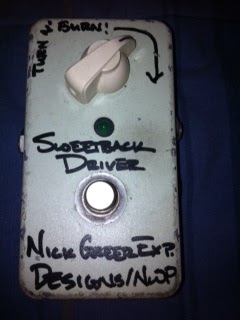
Nick Greer Sweetback Driver boost pedal
First of all, I'll repeat the description of the pedal from a Nick Greer dealer:
"The Sweetback is the mean, angry brother to the Sonic Boom. This pedal is a boost/distortion pedal that features one knob labeled "Turn N Burn." As the user turns the knob up the pedal begins to crackle and pop as DC voltage is being adjusted. Once the knob is set, the pedal is quiet. An increase in the knob's position results in an increase in volume as well as an increase in gain coming from the pedal.
This pedal will drive the front end of an amplifier like no other. Users should note that the pedal, when the knob is full down, produces whatever signal is being fed into it; it does not limit the sound but can only boost or distort the sound that is being injected into it. Though the pedal does add some hair as the user brings the knob up, it does not color the sound drastically. The coloration of the sound is a fattening effect that results in very little loss of the fidelity of the original guitar sound."
The pedal is a combination of a boost in volume and an increase in gain. The increase in gain is the result of a change in the negative feedback of the guitar's signal. This change increases how hard the input tube of a tube amp is pushed when the pedal is used. With a clean amp, the pedal is still basically a clean boost, with just a little grit and bottom end added. But with an amp that is already overdriven, the pedal offer just enough oomph to push the amp into more sustain and an increase in harmonics, with no unnatural compression and none of the mushiness that may occur when pushing an overdriven amp with a standard overdrive/distortion/fuzz pedal. All of this without increasing the overall volume excessively.
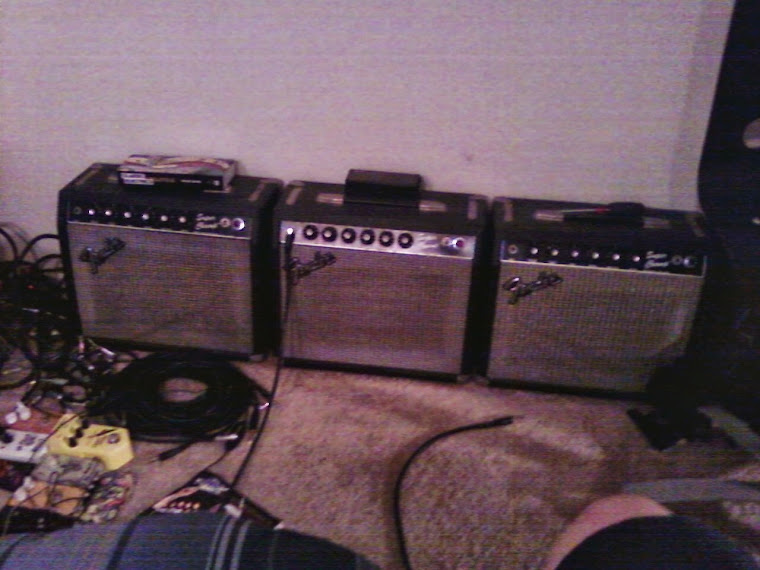
When pushing my Fender Super Champ in the normal channel with the volume on 5 and the midrange boost pulled, the added boost/gain sounds amazing, pushing the input tube of the amp into rich, harmonically complex overdrive/distortion that retains touch sensitivity and note clarity and is totally unique to this combination of amp and pedal. It's probably the best pedal for a high gain amp like the Super Champ, set on a low to medium gain setting, for adding extra signal to push the amp into natural, higher gain tube distortion. With the Fender Super Champ and the Sweetback Driver, I have a low to medium gain rhythm sound with the pedal in bypass and a higher gain natural tube distortion with the pedal on. This pedal will enhance the natural tone of your amp without coloring the sound, it's absolutely amazing into a overdriven tube amp. More so than just a clean boost, this pedal drives a tube amp like no other.
"The Sweetback is the mean, angry brother to the Sonic Boom. This pedal is a boost/distortion pedal that features one knob labeled "Turn N Burn." As the user turns the knob up the pedal begins to crackle and pop as DC voltage is being adjusted. Once the knob is set, the pedal is quiet. An increase in the knob's position results in an increase in volume as well as an increase in gain coming from the pedal.
This pedal will drive the front end of an amplifier like no other. Users should note that the pedal, when the knob is full down, produces whatever signal is being fed into it; it does not limit the sound but can only boost or distort the sound that is being injected into it. Though the pedal does add some hair as the user brings the knob up, it does not color the sound drastically. The coloration of the sound is a fattening effect that results in very little loss of the fidelity of the original guitar sound."
The pedal is a combination of a boost in volume and an increase in gain. The increase in gain is the result of a change in the negative feedback of the guitar's signal. This change increases how hard the input tube of a tube amp is pushed when the pedal is used. With a clean amp, the pedal is still basically a clean boost, with just a little grit and bottom end added. But with an amp that is already overdriven, the pedal offer just enough oomph to push the amp into more sustain and an increase in harmonics, with no unnatural compression and none of the mushiness that may occur when pushing an overdriven amp with a standard overdrive/distortion/fuzz pedal. All of this without increasing the overall volume excessively.
When pushing my Fender Super Champ in the normal channel with the volume on 5 and the midrange boost pulled, the added boost/gain sounds amazing, pushing the input tube of the amp into rich, harmonically complex overdrive/distortion that retains touch sensitivity and note clarity and is totally unique to this combination of amp and pedal. It's probably the best pedal for a high gain amp like the Super Champ, set on a low to medium gain setting, for adding extra signal to push the amp into natural, higher gain tube distortion. With the Fender Super Champ and the Sweetback Driver, I have a low to medium gain rhythm sound with the pedal in bypass and a higher gain natural tube distortion with the pedal on. This pedal will enhance the natural tone of your amp without coloring the sound, it's absolutely amazing into a overdriven tube amp. More so than just a clean boost, this pedal drives a tube amp like no other.
Subscribe to:
Posts (Atom)
.jpg)